![Sunflower F.U.N.D. [Funding Ukrainian Networks Directly]](http://images.squarespace-cdn.com/content/v1/6444bf6e427151143279a958/e181964a-75cd-4b2f-b546-b60fefd8e227/Website+Logo.png?format=1500w)
About - Our Origin
Our Story
Sunflower F.U.N.D. was born from one woman's refusal to look away — from a war that felt personal, from people whose suffering she recognized, and from a conviction that direct action, done with urgency and accountability, is the only kind that actually matters.
The Beginning
It Felt Like A Gravitational Pull
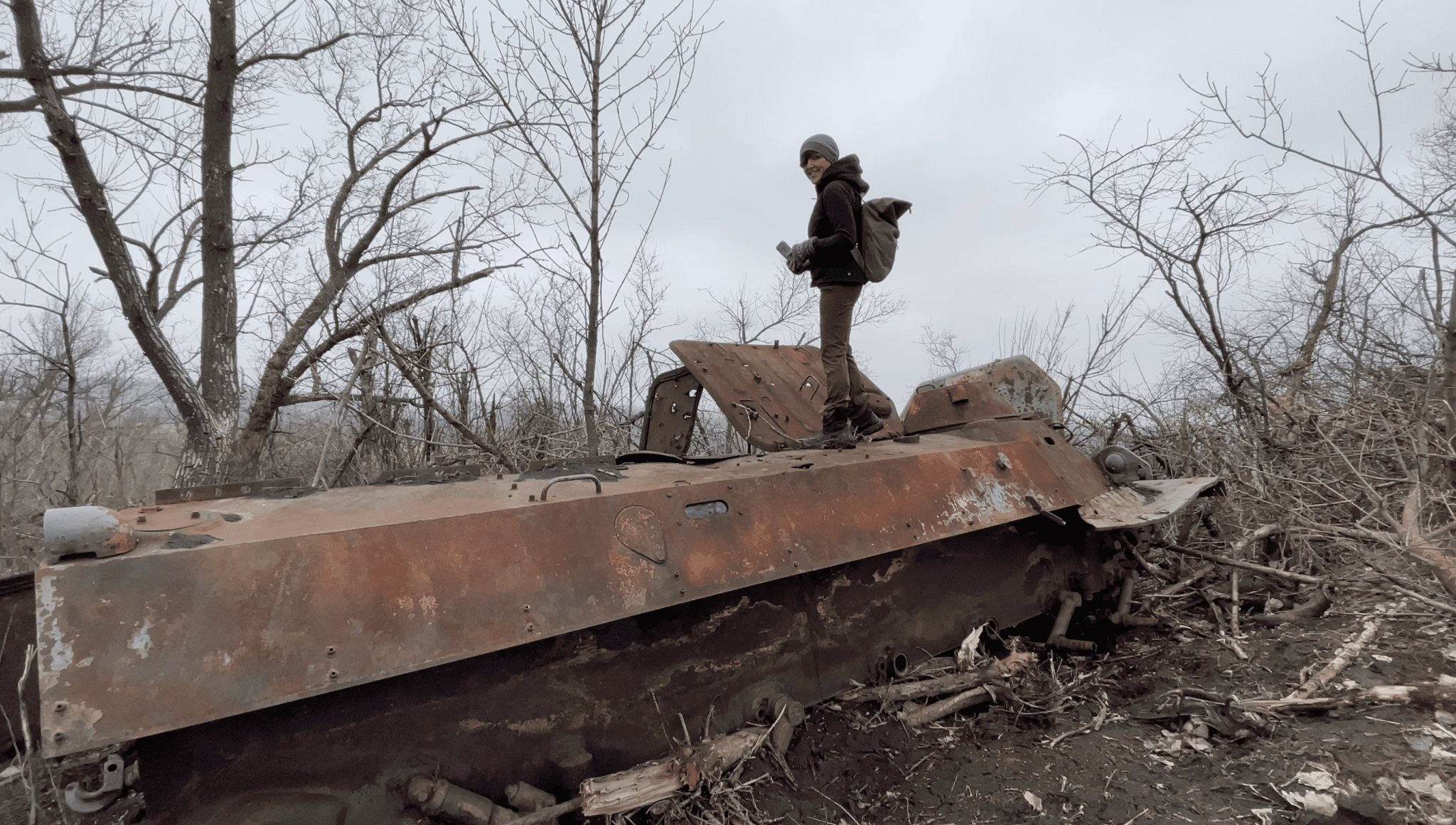
"I heard their stories about what their new normal is — which was just utterly unimaginable from a year ago. They went from living in a somewhat peaceful land to an apocalypse. How do you adapt to that and keep surviving?"
Markéta Vorel, Founder
When Russia launched its full-scale invasion of Ukraine in February 2022, Markéta Vorel was an estate planning attorney in Anacortes, Washington. She was also something else: a former refugee. She had grown up in Czechoslovakia under Soviet oppression, and what was happening in Ukraine was not abstract to her.
At first she donated money. But the helplessness grew. She watched the news, she followed the fighting, and eventually there was only one thing she could do. "It felt like a gravitational pull," she would later say. "I just wanted to be there. That's as far as I can explain it."
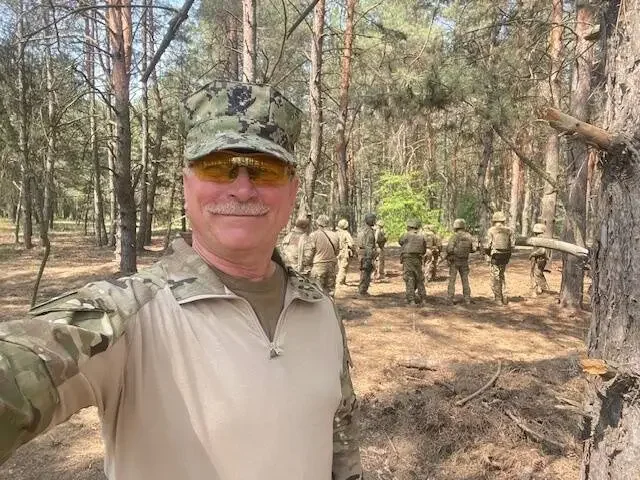
In early 2023, Markéta traveled to Ukraine — not as a soldier or a medic, but as a witness and a helper. She connected with Sharon Harris, an Anacortes community advocate who had already been working in Ukraine since the first weeks of the invasion, driving a van she bought in Poland across the border to move people and aid. Together they crisscrossed Ukraine — from Odesa in the south to Kharkiv in the northeast — securing supplies in one town and delivering them to another, traveling artillery-cratered roads and meeting everyone from military commanders to women sheltering their children in basements.
First Hand Accounts
Ukrainians Are Not Cowering.
They are Living.
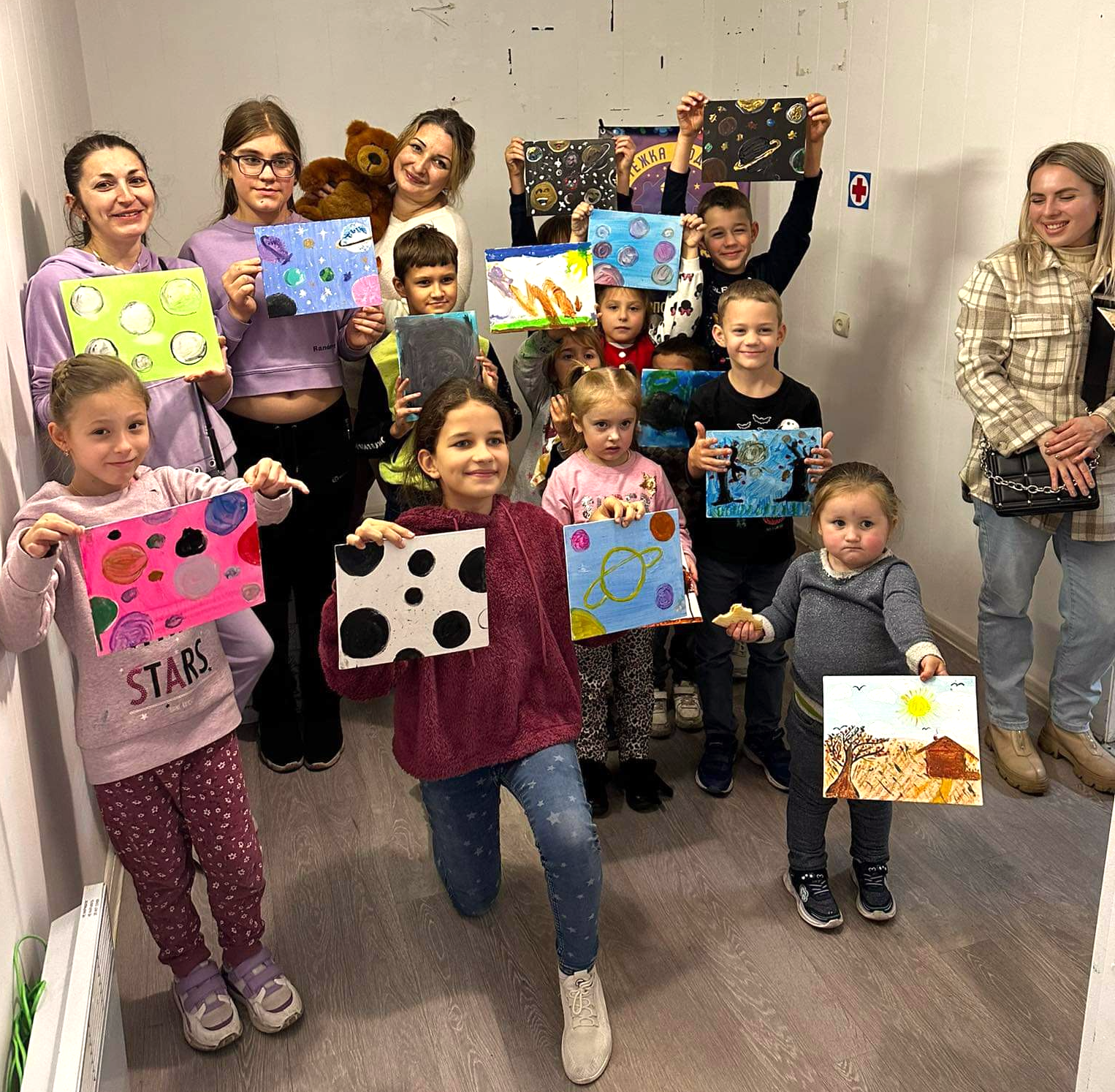
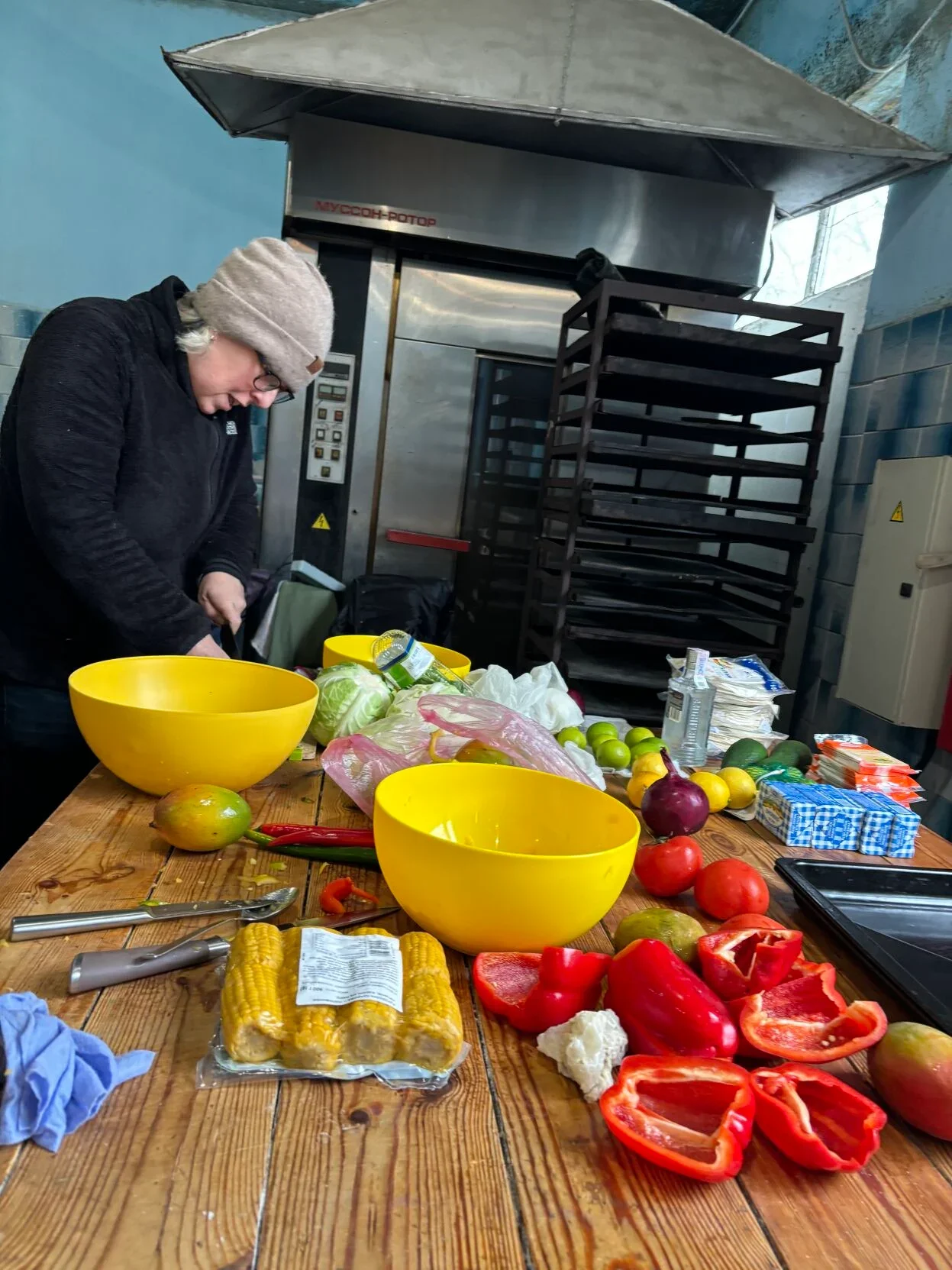
From Markéta's journal — Kharkiv, March 2023
Standing in these fields, she encountered a single dead sunflower between bullet-riddled trees and Russian trenches. It stopped her. Unapologetic, unyielding, unconquered — rooted in native soil despite everything around it having been atomized. She called it a demand: remember what happened here. Do not let it slip away.
She spent two months in Ukraine in early 2023 — the longest stretch any of us can imagine, except it still wasn't long enough. What she witnessed defied what she expected: not collapse, but resilience. Not surrender, but life, carried on with determined normalcy in the face of annihilation.
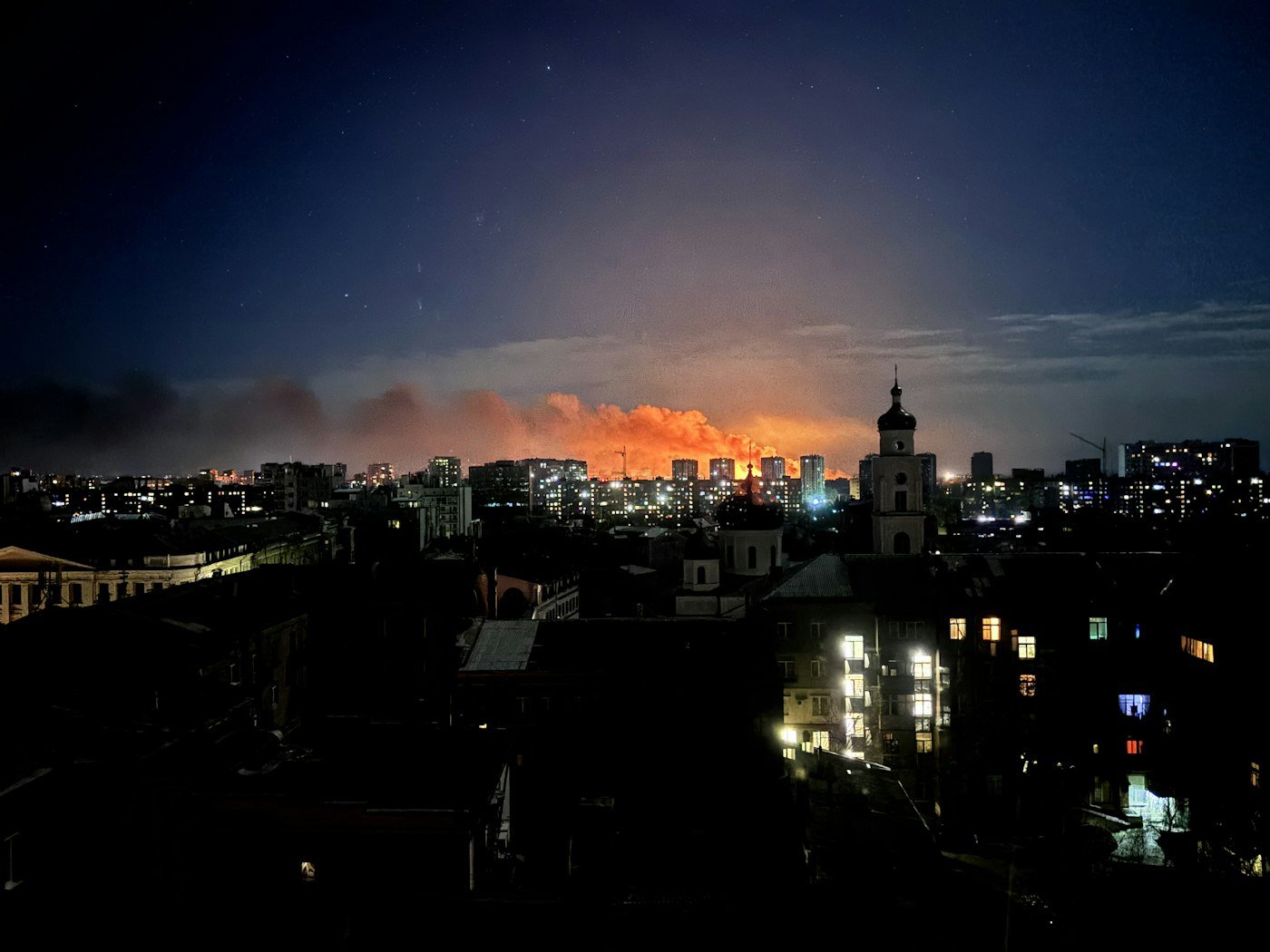
The night before a concert of the National Philharmonic in Kyiv, Russia launched one of its largest missile attacks — 84 missiles at infrastructure and residential areas across the country. The concert the next day went on. Not a seat was empty. "To me, that's the epitome of resistance," Markéta said. "You're going to bomb us in the morning? We're going to show up to the philharmonic that night."
She met a teacher who spent every night distributing humanitarian aid — whose husband was at the front. A lawyer who sent his family to Poland but stayed to fight. A violinist who played seven days a week and used the extra money to buy socks and hand warmers for soldiers. An economist who gave up her job to fight on the front lines. People who, having nothing left to give, gave their homes.
They were well-educated, articulate, stoic — and they were not hiding. They walked their dogs, sat in cafes, and rebuilt playgrounds that had been hit by missiles. They accepted the risk of a bomb the way others accept the risk of a car accident. A fact of the new normal. Not negotiable. Not surmountable. Just absorbed and moved past.
And there, in a field of destroyed Russian tanks near Kharkiv, between bullet-riddled trees and abandoned trenches, she found a sunflower. Dead, artillery-singed, still standing. It undid her. And it named everything she was trying to do.
The Founding
From Witness To Action - May 2023

"One hundred percent of what you donate goes directly to Ukraine, immediately. I am basically just a clearinghouse for the money to get there."
Markéta Vorel, Founder
Markéta returned home to Anacortes in spring 2023. Leaving felt like leaving people behind — the women at the shelter in Odesa, the evacuation teams in Kharkiv, the fighters at the front. She couldn't unknow what she had seen. And she had recognized something specific in Ukraine: the organizations doing the most effective work were small, Ukrainian-run, deeply embedded in local networks — and almost invisible to the large international nonprofits that received the most funding.
The big organizations, she observed, got the biggest donations — and then pulled out when the shelling got close. They weren't connecting Ukrainians with what they needed. The real work was being done by Ukrainians helping Ukrainians, moving fast, operating on trust and urgency, with almost no outside support.
So she founded Sunflower F.U.N.D. — Funding Ukrainian Networks Directly. A 501(c)(3) nonprofit with a single operational principle: 100% of every donation reaches a vetted Ukrainian partner organization within 24 hours. No overhead deducted. No bureaucratic lag. No excuses. Just the most direct possible line between a donor in Anacortes and someone in urgent need in Ukraine.
In its first two weeks, the fund raised $7,000. Within a year, it had delivered more than $100,000 to partner organizations. The model worked because it was built on something that large institutions cannot manufacture: personal trust, direct relationships, and the willingness to go.
The Journey
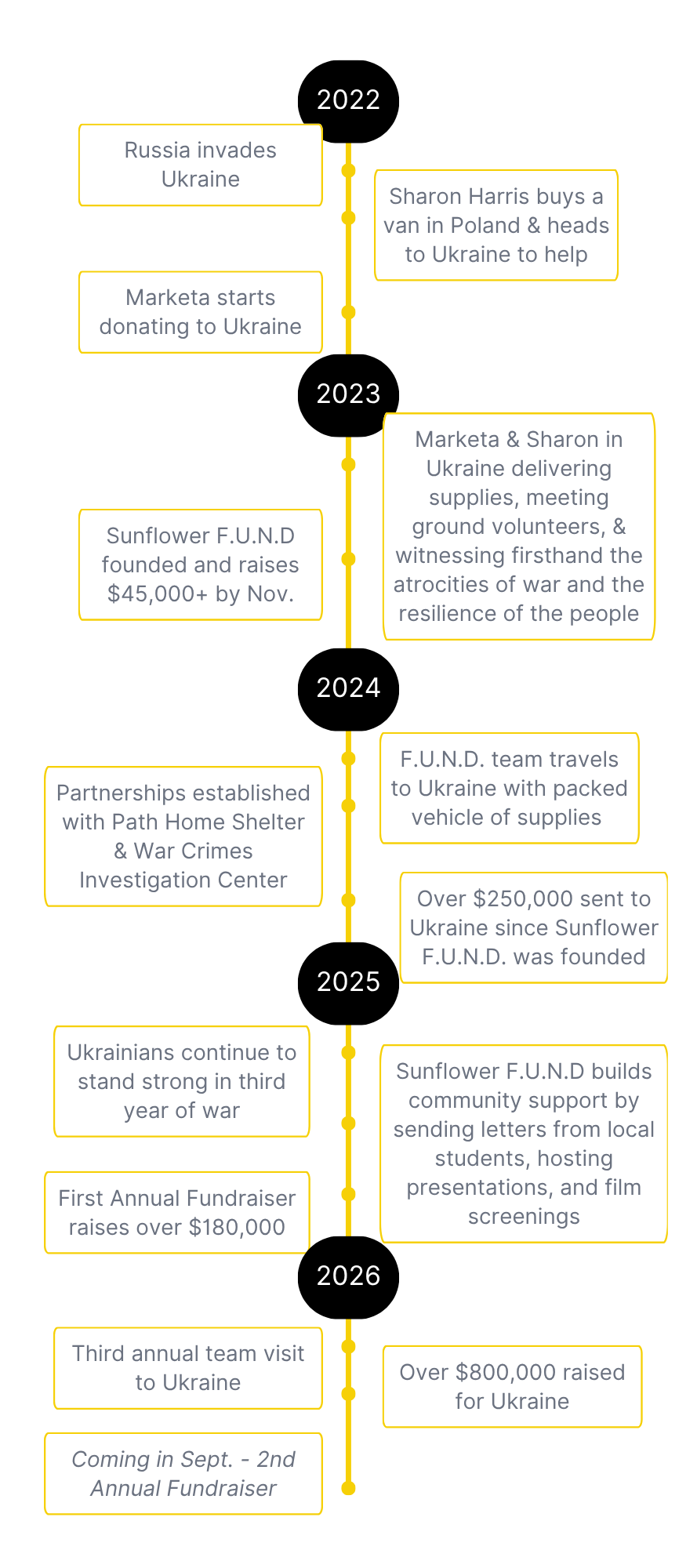
From A Van In Poland to $600,000+ Delivered
"One hundred percent of what you donate goes directly to Ukraine, immediately. I am basically just a clearinghouse for the money to get there."
Markéta Vorel, Founder
As Told By Others
Our Story In The Press
Get Involved
Ukraine Still Needs Us
The Ukrainian people are fighting for democracy, for liberty, for the right to speak their own language, honor their own culture, and exist as a free nation. This is not a distant conflict. It is the front line of the same values that underpin the society every one of us in Anacortes and across the Pacific Northwest lives in.
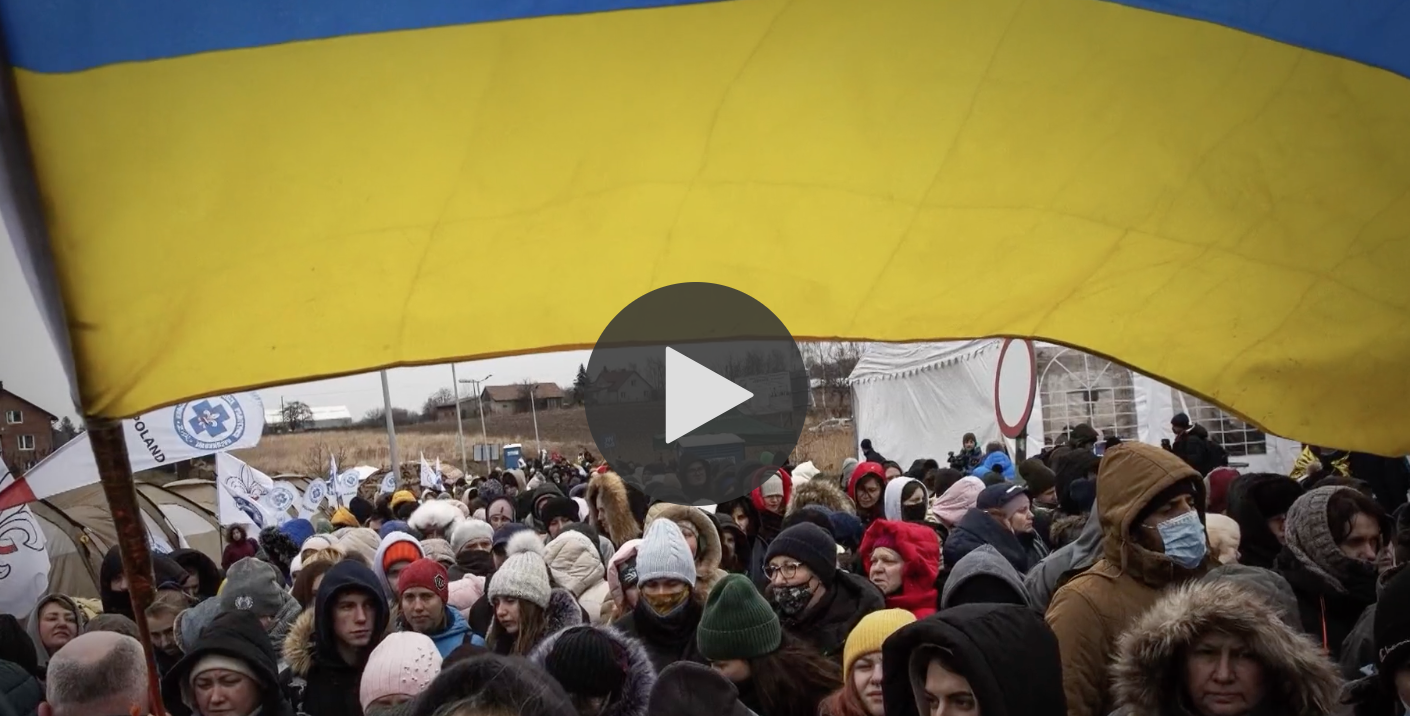
More than 8 million Ukrainians remain displaced. Frontline cities are still under regular bombardment. Civilian infrastructure — schools, hospitals, power grids — continues to be deliberately targeted. The women at the Path Home shelter in Odesa are still arriving. The evacuation teams near Kharkiv are still running missions 12 miles from the Russian border. The need for what we do has not diminished. It has grown.
We are not going to solve this war. But we can make sure that the people fighting it — and the civilians caught in it — know that someone in a small town on an island in the Pacific Northwest is paying attention. And sending help.